What are Concrete Polishing Resin Pads and How to Choose Them?
Concrete polishing has gained popularity in both residential and commercial sectors. The demand for durable and aesthetically pleasing flooring solutions is increasing. According to industry reports, the global concrete polishing market is expected to reach $3 billion by 2025. This growth highlights the importance of using the right tools, such as Concrete Polishing Resin Pads.
These resin pads are essential for achieving a high-gloss finish on concrete surfaces. They come in various grit levels, allowing for customized polishing options. Many users face challenges when selecting the appropriate pads. It's not always clear which pads will deliver the best results, especially for beginners. The learning curve can be steep, leading to frustration and wasted time.
Understanding the features of Concrete Polishing Resin Pads is crucial. Factors such as bond type, grit, and thickness can impact performance. Many people overlook these details, resulting in subpar finishes. Making informed decisions is key to maximizing the benefits of these products. An improper choice can lead to unsatisfactory results and costly rework.

What are Concrete Polishing Resin Pads?
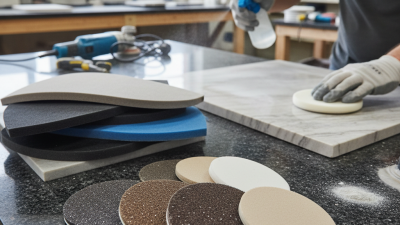
Concrete polishing resin pads are specialized tools used in the process of grinding and finishing concrete surfaces. These pads are made of a combination of resin and abrasive materials. The resin binds the abrasives together, providing flexibility and durability. They come in various grits, allowing for different levels of polishing from coarse to fine. The choice of grit can affect the final appearance of the concrete.
When selecting resin pads, consider the type of concrete surface you will be working on. Different concrete mixes may require specific pads. For instance, harder concrete may need more aggressive abrasives, while softer surfaces may benefit from finer pads. The condition of the floor also matters. If the surface is heavily damaged, starting with a coarser grit is essential.
Tips: Regularly check the wear of your pads. Worn pads may not deliver the desired finish. Additionally, test different grits on a small area before proceeding with the entire surface. This practice can save time and avoid mistakes. Remember that the right pad can make a significant difference, but practice is equally important. Embrace imperfections and refine your technique with each project.
What are Concrete Polishing Resin Pads and How to Choose Them?
| Pad Type |
Grit Size |
Application |
Durability |
Recommended Use |
| Standard Resin Pad |
50 to 400 |
Concrete polishing |
Medium |
Initial grinding and polishing |
| Hybrid Pad |
200 to 800 |
Concrete and terrazzo |
High |
Medium to high gloss finish |
| Resin-Super Pad |
300 to 3000 |
High-end polishing |
Very high |
Final polish for a mirror finish |
| Diamond Pad |
50 to 3000 |
Hard surfaces |
Extremely high |
Surface preparation and finishing |
Types of Concrete Polishing Resin Pads Available
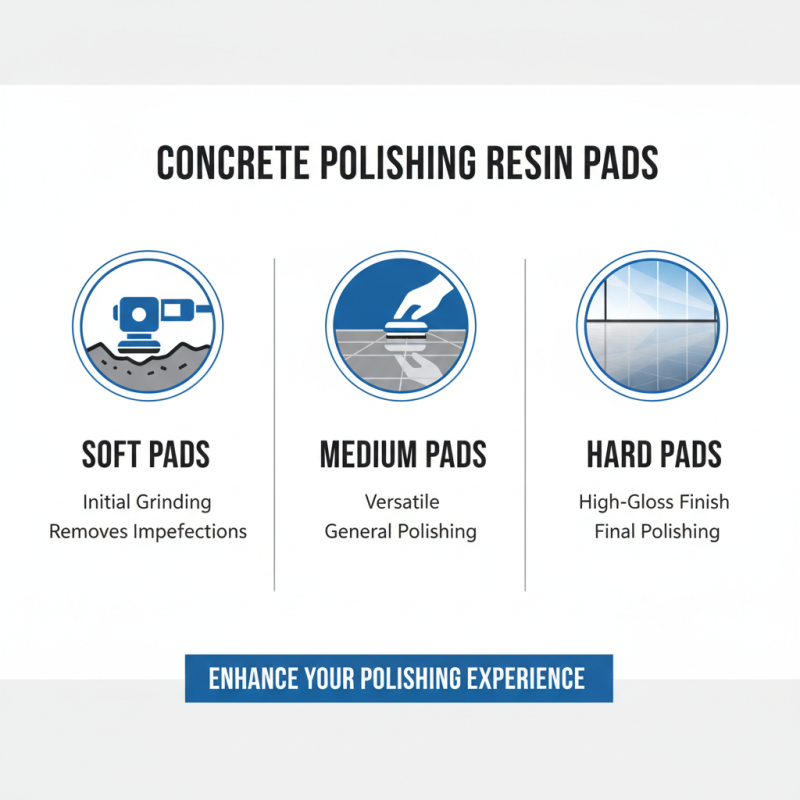
When it comes to concrete polishing, resin pads play a crucial role. There are various types available, each designed for specific purposes. Understanding these differences can significantly enhance your polishing experience. You can choose from soft, medium, and hard pads. Soft pads are ideal for initial grinding. They help to remove surface imperfections effectively. Medium pads are versatile and suit most polishing jobs. Hard pads are great for achieving a high gloss finish.
The grit size is another important factor. Coarse pads, with lower grit numbers, are useful for heavy material removal. Fine pads, with higher grits, polish surfaces to a smooth finish. Some pads are designed for wet use, while others work better in dry conditions. This choice impacts dust control and the overall finish.
One might overlook the importance of pad maintenance. Regular cleaning can prolong their life. Using the wrong pad for a specific task can lead to frustration and wasted materials. Not every pad works for every surface. It's a trial-and-error process to find the right fit. If an incorrect pad is used, it could cause damage rather than improvement. This journey involves learning from mistakes.
Factors to Consider When Choosing Resin Pads
When choosing concrete polishing resin pads, several important factors come into play. The hardness of the pads is a critical aspect. Harder pads are ideal for dense concrete, while softer pads work better with softer concrete. According to industry reports, selecting the wrong hardness can lead to inefficiencies and uneven surfaces, costing time and resources.
Another factor is the grit size of the pads. Generally, lower grit sizes (around 30-50) are meant for aggressive grinding. Higher grit sizes (100-300) are used for polishing. A study showed that improper grit selection contributes to 35% of poor surface finishes in concrete polishing projects. This can be frustrating for contractors, as it impacts the final result.
Additionally, the bond type of the resin pads should be considered. There are various bond options, including metallic, resin, and hybrid. Each bond performs differently depending on the job requirements. Sometimes, contractors overlook this detail, which can lead to subpar results. Proper training and knowledge about these factors can make a significant difference in achieving a polished and durable floor.
Best Practices for Using Concrete Polishing Resin Pads
Concrete polishing resin pads are essential tools for achieving a smooth surface on concrete floors. Using them correctly can make a significant difference in your results. It’s crucial to start with the right grit level. Higher grit pads create a glossy finish, while lower grits are for initial grinding. Before applying, ensure the surface is clean and dry. Any debris can cause scratches.
During the polishing process, adjust the speed of your machine for best results. Too fast can cause burn marks; too slow may not polish effectively. Take breaks to assess your progress. You may find uneven spots that need extra attention. Use water wisely; it helps reduce dust but can lead to sludge if overused.
Pay attention to the pressure you apply. Too much can wear out pads quickly, while too little may not achieve the desired shine. It’s a balancing act that requires practice. Document your process for future projects. Learning from mistakes, like choosing the wrong grit, can lead to better outcomes with each job. Each project teaches you something new, which is the beauty of working with concrete.
Concrete Polishing Resin Pads Usage and Performance
Common Mistakes to Avoid with Resin Pads in Concrete Polishing
Choosing the right resin pads for concrete polishing is crucial. Many make mistakes that can lead to poor results. One common error is selecting the wrong grit. People often underestimate the importance of grit selection. Using a pad that is too coarse can scratch the surface. On the other hand, a pad that is too fine may not effectively remove imperfections.
Another frequent issue is improper technique. Some people press too hard when polishing. This can cause excessive wear on the pads. It may also lead to uneven surfaces. It’s essential to maintain a consistent speed during the process. Rushing can result in a less-than-perfect finish.
Lastly, overlooking maintenance is a significant mistake. Resin pads require proper cleaning and storage. Failing to clean them can affect their performance. Dirty pads can lead to streaks and a dull appearance. Taking time to care for these tools enhances their lifespan and effectiveness.