Why Are Metal Abrasives Essential for Industrial Applications?
Metal abrasives play a crucial role in various industrial applications. They are primarily used for grinding, polishing, and finishing surfaces. These materials come in several forms, including particles, powders, and wheels. Each type serves a specific purpose depending on the task at hand.
In manufacturing, metal abrasives enhance the efficacy of machining processes. They assist in achieving precise surface finishes that meet rigorous standards. Industries such as automotive and aerospace heavily rely on these materials. However, it's worth noting that choosing the right abrasive is not always straightforward. Factors like hardness and grit size must be carefully considered.
Despite their importance, some applications might overlook the right metal abrasives. This can lead to inefficiencies and increased costs. Proper training and understanding of these materials are essential. Thus, industrial professionals must constantly reassess their abrasive choices to optimize performance. Metal abrasives are not just tools; they are integral components of operational success.
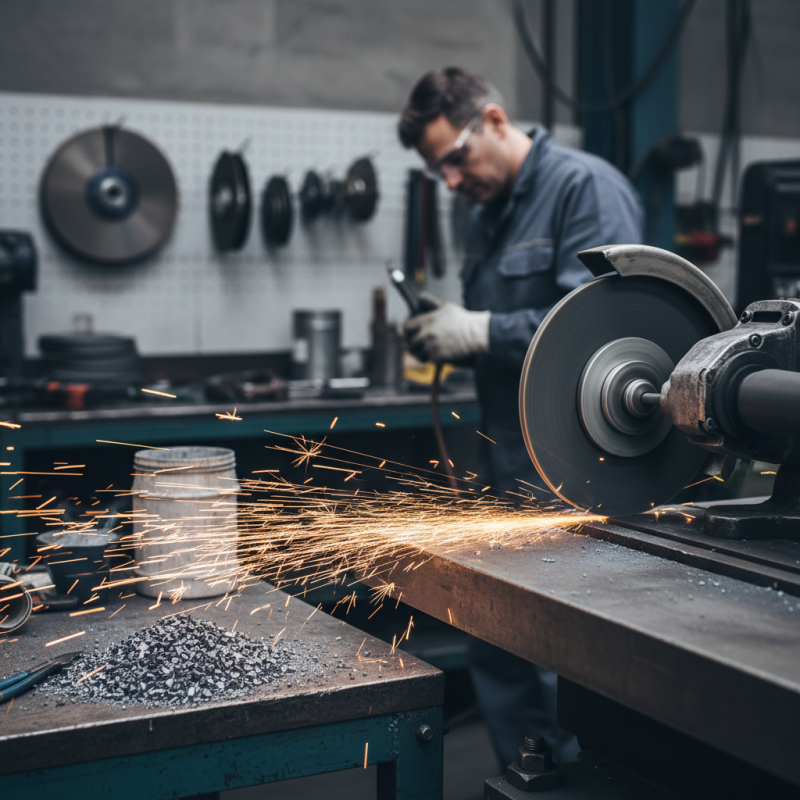
The Definition and Characteristics of Metal Abrasives
Metal abrasives are crucial tools in various industrial processes. These materials enhance the efficiency of cutting, grinding, and polishing applications. Often used in metalworking, they have unique characteristics that make them indispensable. For instance, they are characterized by high hardness and resistance to wear. According to a recent industry report, the global metal abrasives market was valued at over $4 billion in 2022, showcasing their significance.
The types of metal abrasives vary widely. Common forms include steel shots, grits, and beads. Each type serves specific purposes. Steel shots are often used for shot blasting, which removes surface imperfections. On the other hand, abrasives like aluminum oxide are preferred for polishing metals. Interestingly, a survey indicated that nearly 70% of manufacturing sectors rely on metal abrasives for optimizing their production processes. However, the challenge remains. The abrasive material may wear out quickly, necessitating frequent replacements, which can be costly.
Additionally, the performance of metal abrasives can fluctuate based on their material composition. Imperfections in the production process can lead to inconsistent grain sizes. This lack of uniformity affects both efficiency and quality. Operators must often experiment to find the best mix for their specific applications. This trial and error approach highlights the need for ongoing refinement in abrasive manufacturing practices.
Metal Abrasives Usage in Various Industries
The Role of Metal Abrasives in Surface Preparation and Finishing
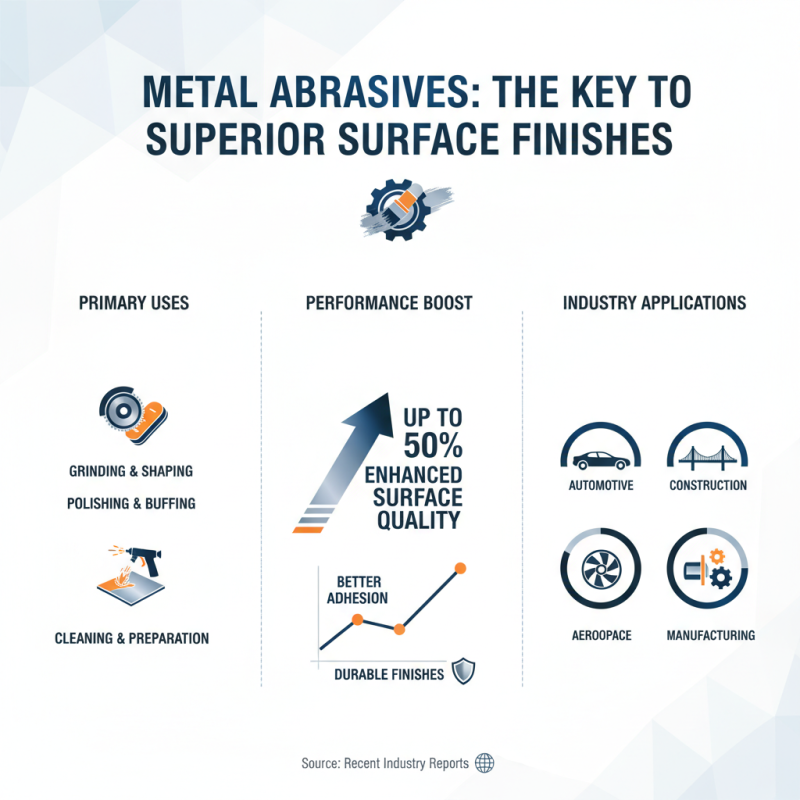
Metal abrasives play a crucial role in surface preparation and finishing across various industries. They are used for tasks like grinding, polishing, and cleaning various materials. According to recent industry reports, metal abrasives can enhance surface quality by up to 50%, depending on the application and material involved. This improvement leads to better adhesion for coatings and paint, essential for durable finishes.
In manufacturing, metal abrasives are critical for processes like sandblasting and shot peening. These processes not only aid in surface cleaning but also significantly reduce residual stress on metal parts. A study revealed that the proper use of abrasives can increase product lifespan by 30%. However, selecting the right type of abrasive is vital. Not all abrasives are suitable for every application, and poor choices can lead to inefficiencies and subpar results.
While metal abrasives are effective, their use also comes with challenges. Overutilization can lead to surface damage or contamination, requiring further remediation. The balance between efficiency and quality is delicate. Continuous evaluation and adjustment of abrasive methods can drive better results. Innovation and adaptation in abrasive technologies are essential for meeting the evolving demands of industries.
Key Industries Utilizing Metal Abrasives for Efficiency
Metal abrasives are integral to various industries, enhancing efficiency and precision. Automotive manufacturing relies heavily on them for surface preparation. They ensure parts are free from imperfections before assembly. In this sector, metal abrasives facilitate paint adhesion and improve overall product durability.
The aerospace industry also benefits significantly from metal abrasives. They are essential in preparing components for stringent safety standards. Precision cleaning and finishing are vital, and metal abrasives help achieve this. However, industries face challenges, such as selecting the appropriate abrasive for specific tasks. The wrong choice can lead to inefficiencies and flawed products.
In the construction sector, metal abrasives play a crucial role in surface treatment and repair. They help in removing rust and old coatings, preparing surfaces for new applications. Despite their advantages, some companies overlook the need for proper safety measures. This oversight can result in worker injury or equipment damage. Reflection on these challenges is needed for continuous improvement.
Why Are Metal Abrasives Essential for Industrial Applications? - Key Industries Utilizing Metal Abrasives for Efficiency
| Industry |
Applications |
Benefits of Metal Abrasives |
| Automotive |
Surface preparation, cleaning parts |
Increased efficiency, improved surface finish |
| Aerospace |
Deburring, surface conditioning |
Precision results, weight reduction |
| Construction |
Metal surface finishing, rust removal |
Enhanced durability, aesthetic appeal |
| Marine |
Cleaning and preparing surfaces for coating |
Corrosion resistance, increased lifespan |
| General Manufacturing |
Polishing, surface treatment |
Cost-effectiveness, high productivity |
Benefits of Metal Abrasives Over Other Abrasive Materials
Metal abrasives play a vital role in industrial applications. They offer unique advantages over other abrasive materials. One key benefit is their durability. Metal abrasives are designed to withstand tough conditions, making them ideal for heavy-duty tasks. This longevity translates to cost savings for businesses.
Another important aspect is their efficacy. Metal abrasives effectively remove rust, paint, and other contaminants. They provide a cleaner and smoother finish, which is crucial for many industries. Compared to organic or synthetic abrasives, metal abrasives deliver faster results, enhancing productivity.
**Tip:** When selecting abrasives, consider the material being processed. Certain metals might respond better to specific types of abrasives.
On the flip side, working with metal abrasives can be tricky. They can generate heat and sparks during use. This aspect requires additional safety precautions. Operators must be vigilant and aware of their surroundings. Ensuring proper ventilation is also essential to minimize dust.
**Tip:** Regularly inspect your abrasives for wear. This practice not only boosts performance but also improves safety. Knowing when to replace them is crucial for optimal results.
Innovations and Trends in Metal Abrasive Technology
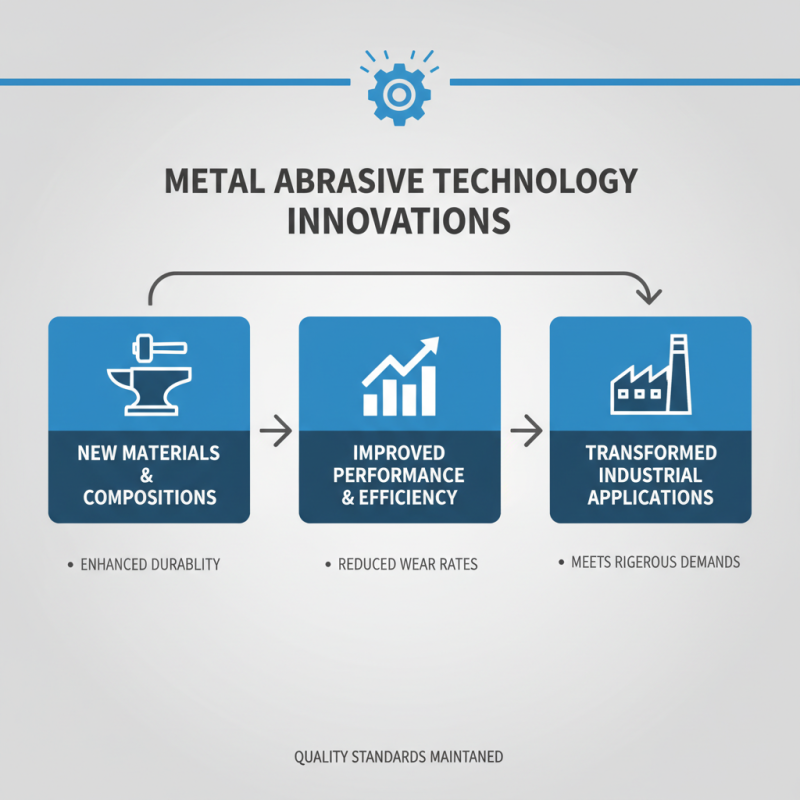
Innovations in metal abrasive technology have transformed industrial applications. New materials are emerging, leading to better performance and efficiency. For instance, advanced compositions enhance durability and reduce wear rates. These innovations help industries meet rigorous demands while maintaining quality standards.
Trends show a shift toward eco-friendly abrasives. Companies are developing non-toxic options that minimize environmental impact. Yet, while these products are promising, they often lack the same effectiveness as traditional materials. Balancing performance and sustainability remains a challenge.
Interestingly, automation is also playing a role. Automated systems improve precision in abrasive applications. However, reliance on technology raises concerns about job displacement. Workers need training to adapt, but resources are often limited. Industries must reflect on how to integrate innovation without losing human expertise.