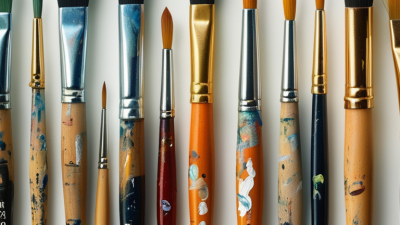
Choosing a reliable Brush manufacturer in China requires more than comparing factory prices. Global buyers must examine production experience, material control, tooling capability, export records, and after-sales support. A factory may show polished catalog images, yet small details often reveal its real ability: evenly set bristles, clean ferrule joints, balanced handles, and packaging that survives long ocean transport.
Quality expert W. Edwards Deming said, “Quality comes not from inspection, but from the improvement of the production process.” His principle applies directly to Brush manufacturing. Strong suppliers build quality into every stage, from selecting synthetic or natural bristles to controlling adhesive curing and final assembly. This article introduces China’s top 10 Brush manufacturers for global buyers, based on practical purchasing concerns and visible manufacturing strengths.
The list considers product range, customization, production consistency, certifications, communication, minimum order quantities, and international delivery experience. It also highlights suitable applications, including household cleaning, personal care, painting, industrial use, and professional grooming. Not every manufacturer fits every project. That matters.
Some buyers focus too heavily on the lowest quotation. A cheaper Brush can create hidden costs through shedding bristles, uneven trimming, damaged cartons, or repeated inspections. I have found that supplier evaluation is rarely perfect from documents alone. Factory audits, sample testing, and clear specifications remain necessary.
The following overview is a starting point, not a substitute for due diligence. Global buyers should verify current certifications, materials, lead times, and compliance requirements before signing contracts. Practical evidence matters more than attractive claims.
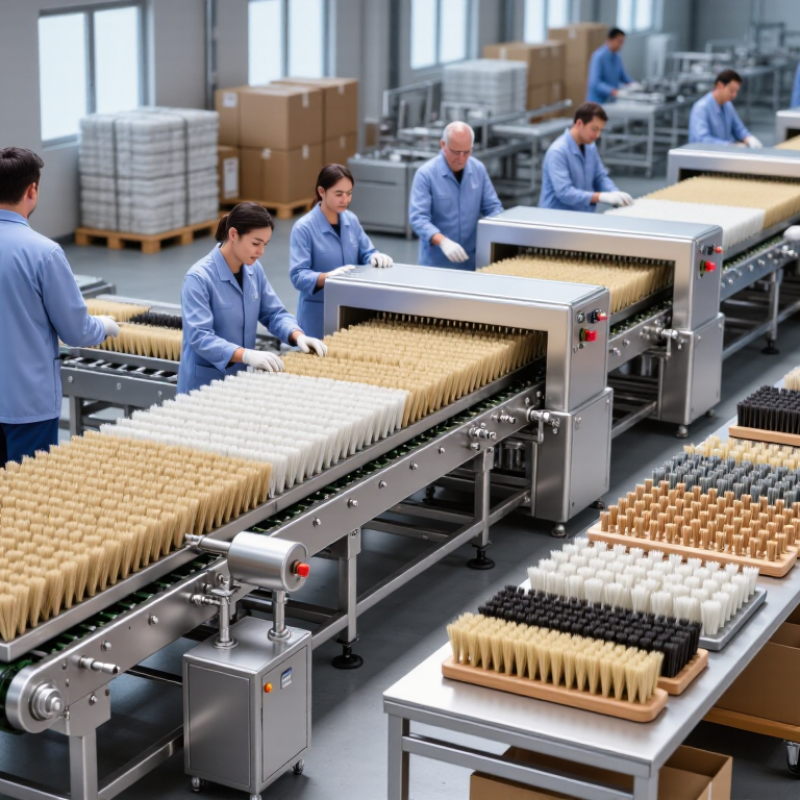
China’s brush manufacturing industry covers household, personal care, industrial, and specialty applications. Factories commonly produce toothbrushes, hairbrushes, shoe brushes, bottle brushes, cleaning brooms, paintbrushes, and machine-cleaning brushes. Each category requires different filament stiffness, handle design, and assembly precision. A kitchen brush may use heat-resistant plastic, while an industrial brush may require abrasive nylon or metal wire. The difference is practical, not cosmetic.
Production usually includes filament preparation, tufting, trimming, handle molding, printing, inspection, and packing. Common materials include polypropylene, PET, nylon, wood, bamboo, and natural fibers. Buyers should request material declarations, dimensional drawings, sample approval, and batch-level inspection records. For export projects, factories may also support packaging customization and documentation for destination-market requirements. Small details matter, such as loose tufts, uneven tips, sharp edges, or weak handle joints.
The industry is broad, but quality varies between suppliers. A factory with modern equipment may still lack strong process control. That is easy to overlook. Buyers can compare bristle pull strength, bending recovery, odor, moisture resistance, and packaging durability through practical testing. Product categories also overlap, so one supplier may make both consumer brushes and technical components. However, shared machinery does not guarantee equal expertise. Clear specifications and repeatable samples remain more dependable than attractive catalogs.
China Top 10 Brush Manufacturers for Global Buyers
The top 10 Chinese brush manufacturers are selected through evidence, not advertising claims. UN Comtrade data shows China’s HS 9603 exports exceeded US$1 billion in 2023, covering brushes, brooms, and related products. This scale suggests strong manufacturing depth, but export value alone proves little about consistency.
The selection process reviews factory experience, production capacity, quality controls, and delivery records. Auditors should inspect bristle alignment, handle bonding, packaging strength, and batch traceability. A reliable supplier can provide test reports, material declarations, and clear sampling procedures. ISO 9001 certification is useful evidence, though it does not guarantee excellent brushes. Buyer feedback from trade databases and shipment records, including ITC Trade Map references, helps verify actual export activity.
Product suitability also matters. Manufacturers are assessed for private-label flexibility, minimum order quantities, tooling support, and response speed. For example, a professional supplier should explain why synthetic filaments suit wet cleaning, while natural fibers may perform differently in dry applications. Sustainability claims require documentation, not attractive wording. No ranking is perfectly objective. Market reports often use different definitions and revenue estimates. That weakness deserves attention. A strong shortlist combines measurable data with factory visits, sample testing, and careful communication before purchase.
| Rank | Anonymous Manufacturer | Manufacturing Region | Primary Brush Categories | Operating History | Export Share | Core Export Markets | Typical MOQ | Standard Lead Time | Customization Capability | Quality & Compliance Evidence | OEM/ODM Support | Selection Score | Overall Rating |
|---|---|---|---|---|---|---|---|---|---|---|---|---|---|
| 1 | Manufacturer Profile 01 | Zhejiang | Paint Brushes Cleaning Brushes | More than 20 years | 70%–80% | North America, Europe, Australia | 500–1,000 units | 25–35 days | Handle, filament, packaging, private labeling | ISO 9001; material and safety documentation | Full OEM/ODM service | 92/100 | ★★★★★ |
| 2 | Manufacturer Profile 02 | Guangdong | Makeup Brushes Personal-Care Brushes | 15–20 years | 60%–70% | Europe, North America, Southeast Asia | 1,000–3,000 units | 30–45 days | Shape, density, coating, ferrule, packaging | ISO 9001; BSCI or equivalent social-audit support | Full OEM/ODM service | 90/100 | ★★★★★ |
| 3 | Manufacturer Profile 03 | Jiangsu | Industrial Brushes Strip Brushes | More than 20 years | 50%–60% | Europe, North America, East Asia | 100–500 units | 20–30 days | Wire, nylon, abrasive filament, shaft and mounting design | ISO 9001; technical drawings and batch records | Engineering-led OEM support | 89/100 | ★★★★★ |
| 4 | Manufacturer Profile 04 | Anhui | Household Brushes Broom Heads | 15–20 years | 60%–70% | Europe, South America, Middle East | 1,000–5,000 units | 25–40 days | Plastic injection molding, bristle selection, carton design | Factory inspection; product testing records | Standard OEM and packaging customization | 87/100 | ★★★★☆ |
| 5 | Manufacturer Profile 05 | Hebei | Paint Rollers Construction Brushes | 10–15 years | 50%–60% | Europe, Central Asia, Africa | 1,000–3,000 units | 30–45 days | Roller fabric, handle, tube, private-label packaging | Quality inspection procedures; export documentation | OEM available for established designs | 85/100 | ★★★★☆ |
| 6 | Manufacturer Profile 06 | Shandong | Agricultural Brushes Street-Cleaning Brushes | More than 15 years | 40%–50% | Europe, Middle East, South America | 500–2,000 units | 30–40 days | Block size, filament stiffness, mounting hole and trim length | Material traceability; pre-shipment inspection | Technical customization available | 84/100 | ★★★★☆ |
| 7 | Manufacturer Profile 07 | Fujian | Hair Brushes Barber Brushes | 10–15 years | 50%–60% | North America, Europe, Southeast Asia | 1,000–3,000 units | 30–45 days | Wood, plastic, cushion, bristle blend and gift packaging | Product inspection; packaging and material declarations | OEM/ODM for medium-volume orders | 83/100 | ★★★★☆ |
| 8 | Manufacturer Profile 08 | Henan | Bristle Blocks Industrial Components | More than 15 years | 40%–50% | Europe, North America, East Asia | 500–1,000 units | 25–40 days | Filament material, block geometry and drilling pattern | Incoming-material control; dimensional inspection | Custom production based on drawings | 81/100 | ★★★★☆ |
| 9 | Manufacturer Profile 09 | Hubei | Cleaning Tools Floor Brushes | 10–15 years | 40%–50% | Middle East, Africa, Southeast Asia | 1,000–5,000 units | 30–50 days | Handle length, head size, filament color and carton printing | Pre-shipment inspection; basic compliance files | Standard OEM support | 79/100 | ★★★★☆ |
| 10 | Manufacturer Profile 10 | Shanghai | Specialty Brushes Laboratory Brushes | 10–15 years | 30%–40% | Europe, North America, East Asia | 100–500 units | 25–45 days | Small-batch development, filament selection and precision dimensions | Technical documentation; batch inspection records | Prototype and small-volume OEM support | 78/100 | ★★★★☆ |
China’s top brush manufacturers serve household, beauty, industrial, and technical markets. This profile compares ten representative supplier types rather than treating “top” as a permanent ranking. Market position can change with capacity, audits, and export performance. UN Comtrade data for HS 9603 consistently identifies China as a major global exporter of brushes, brooms, and cleaning tools. Grand View Research also estimates steady growth in household cleaning tools, supported by hygiene awareness and commercial demand.
The first profile focuses on mass-produced household brushes, using automated injection molding and nylon filling. Another specializes in bamboo and wood handles, but moisture control remains a weakness. A third supplies salon brushes with heat-resistant fibers and balanced grips. The fourth serves industrial users with abrasive, strip, and roller brushes. A fifth produces oral-care brush components under strict material controls. Another develops artist and craft brushes, where tip alignment matters more than output speed. The seventh offers private-label cleaning sets with flexible packaging. The eighth handles short-run customization, useful for testing new designs. The ninth emphasizes recycled polymers, although sustainability claims need documentation. The tenth combines tooling, sampling, and inspection in one factory.
Purchasers should verify ISO 9001 records, material declarations, batch traceability, and third-party test results. The OECD Due Diligence Guidance supports documented supplier checks, not unsupported marketing claims. Factory videos help, but they are not audits. A sample may pass while production drifts. That happens. Inspect dimensions, bristle density, pull strength, odor, and packaging before shipment. Costs matter, yet inconsistent filling can create returns and damage a buyer’s reputation.
This chart summarizes the manufacturing capabilities commonly associated with the ten profiled Chinese brush manufacturers. The values represent the number of manufacturers in the reference group offering each capability, rather than company or brand performance data.
When comparing China’s top ten brush manufacturers, quality should begin with materials, not marketing claims. Check bristle softness, handle strength, ferrule fitting, and surface finishing through physical samples. A reliable factory can provide material specifications, inspection records, and batch photos. Samples reveal more. Test brushes after repeated washing, bending, or dry use, depending on the application.
Customization often includes logo printing, handle shapes, colors, packaging, and bristle density. Ask whether these changes require new molds or only artwork adjustments. Mold charges can alter the real quotation. Confirm printing durability with a simple abrasion test. Packaging also deserves attention. A brush may arrive with crushed boxes, loose labels, or poorly sealed cartons. Small details affect retail readiness.
Pricing should be compared against production capacity and consistency. A low unit price may exclude tooling, inspection, inner cartons, or export packaging. Request a complete cost breakdown and a written minimum order quantity. For larger orders, review monthly output, equipment, worker training, and backup suppliers for key materials. A factory may claim high capacity but struggle during peak seasons. I have found that realistic lead times are more useful than impressive promises. Even experienced buyers can overlook communication delays, so approval samples and milestone checks should be written into the purchase plan.
When evaluating China’s top brush manufacturers, global buyers should look beyond polished websites and factory videos. Request a company profile, production address, export history, and recent quality records. A video proves little. Ask for samples made with the same materials, handle design, bristle grade, and packaging as the final order. Test shedding, odor, stiffness, balance, and durability under normal use.
Clear specifications prevent expensive misunderstandings. Confirm dimensions, tolerances, materials, color references, labeling, carton strength, and acceptable defect limits in writing. Responsible suppliers should provide relevant compliance documents for your destination market. Verify them through accredited testing bodies when needed. An independent pre-shipment inspection can check random cartons, quantities, appearance, and packing details before payment is completed.
Communication also reveals professionalism. Reliable manufacturers answer technical questions directly and explain production limits without exaggeration. Compare quotations carefully; an unusually low price may hide weaker fibers, inconsistent assembly, or poor packaging.
Clarify minimum order quantities, sample fees, lead times, payment stages, shipping terms, and responsibility for defects. Do not rely on promises alone.
There is room for error. Even a qualified supplier may miss a color shade or packing detail. Keep approval samples, inspection photos, and written records. Start with a controlled order before expanding volume. A small trial may feel inefficient, but it exposes weaknesses while the cost remains manageable. Good sourcing requires evidence, patience, and occasional reconsideration.