page_banner

Top 10 Diamond Hand Polishing Pads for Global Buyers

Choosing the right Diamond Hand Polishing Pad can determine whether a stone surface looks refined or uneven. Global buyers need more than attractive product photographs. They must compare grit progression, diamond concentration, backing flexibility, water requirements, and compatibility with granite, marble, quartz, concrete, or engineered stone.

Stone-care expert Fred M. Hueston explains, “Polishing is controlled abrasion, not simply rubbing a surface.” This principle matters in real workshops. A coarse pad may remove saw marks quickly, while a fine pad can reveal dull streaks under bright inspection lighting. The operator’s pressure also matters. Too much force may create heat, uneven gloss, or premature pad wear. Not every pad behaves perfectly.

This guide reviews the Top 10 Diamond Hand Polishing Pads for Global Buyers through a practical purchasing lens. Each option should be judged by finish quality, cutting speed, durability, edge control, and working comfort. Wet and dry performance also deserves attention, especially where water access, dust control, or job-site conditions vary. Product specifications can look impressive, yet field testing may tell a different story. That is the part buyers should not ignore.

The best Diamond Hand Polishing Pad is not always the most expensive one. It should match the material, tool, grit sequence, and technician’s technique. Small differences become visible around sink openings, countertop edges, and repaired corners. A careful comparison can reduce rework and improve consistent results across international projects.
Top 10 Diamond Hand Polishing Pads for Global Buyers

Diamond Hand Polishing Pads: Purpose, Structure, and Main Applications

Diamond Hand Polishing Pads: Purpose, Structure, and Main Applications

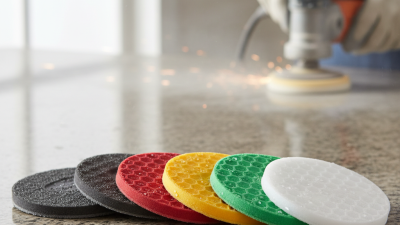
Diamond hand polishing pads are compact abrasive tools for refining edges, corners, and small surfaces. They remove scratches that larger machines often miss. In stone workshops, technicians use them on granite, marble, terrazzo, engineered stone, and some ceramics. They are also useful for controlled work around sinks, curves, and narrow profiles.

A pad usually contains diamond particles, a bonding layer, and a flexible backing. The bond controls how quickly the diamonds wear and cut. Resin bonds often provide smoother finishing, while metal or electroplated designs can offer stronger initial abrasion. Grit selection matters. Coarse grits level marks, medium grits refine the surface, and fine grits improve clarity. Not every pad follows the same performance pattern.

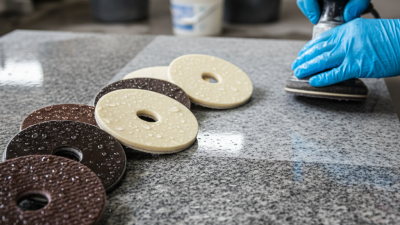
Use water when the material and tool instructions allow it. Water reduces dust and helps control heat. Keep the pad flat, apply moderate pressure, and inspect the surface frequently. Too much pressure can create uneven dull patches. Small details matter.

For global buyers comparing the top 10 diamond hand polishing pads, construction quality should outweigh attractive packaging. Check grit consistency, backing flexibility, edge durability, and performance on the target material. A pad that works well on granite may behave poorly on glass or soft marble. This is easy to overlook. Test a small hidden area before full polishing, because surface hardness, operator pressure, and moisture can change the result.

Top 10 Diamond Hand Polishing Pads for Global Buyers

Diamond hand polishing pads are flexible abrasive tools used for smoothing, shaping, and finishing stone, concrete, glass, ceramics, and engineered materials. The grit sequence below reflects commonly used diamond abrasive grades, progressing from material removal to high-gloss polishing.

How to read the chart: Lower grits remove material more aggressively and are suitable for leveling and scratch removal. Higher grits produce finer surfaces and are used for pre-polishing, final polishing, and gloss enhancement. Actual results depend on the workpiece material, pad construction, water use, pressure, and polishing technique.

Key Types of Diamond Hand Polishing Pads by Material and Surface Finish

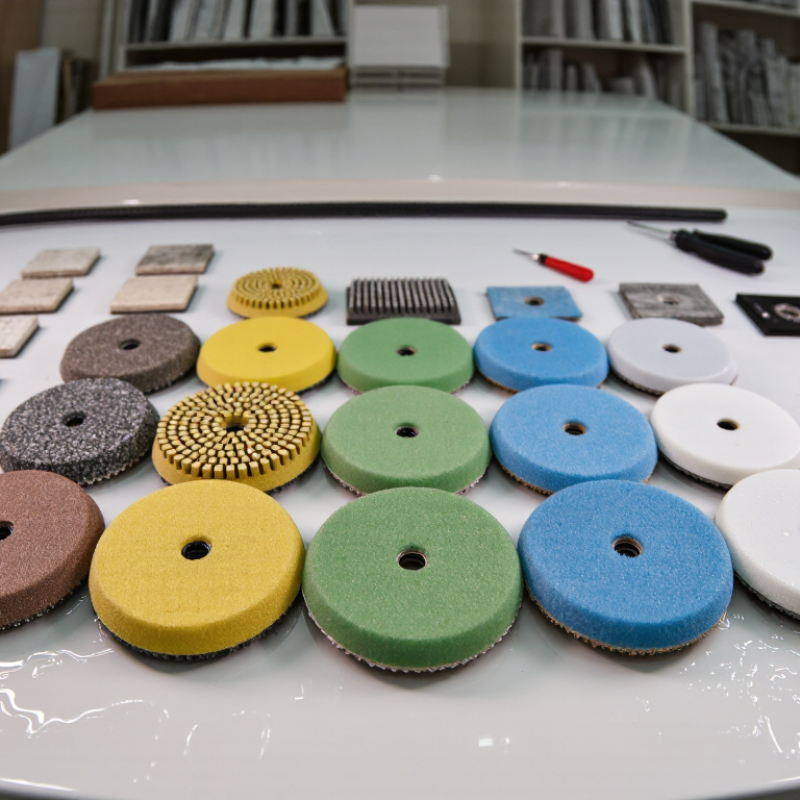
Choosing among the top ten diamond hand polishing pads starts with material compatibility. Electroplated pads cut quickly on glass, ceramic, and hard stone. Resin-bond pads offer smoother control on marble and engineered surfaces. Metal-bond pads remove scratches aggressively from concrete and granite. Hybrid pads balance cutting speed with a cleaner transition between grits. Ceramic-bond pads can deliver steady abrasion, but they may feel less forgiving on delicate edges.

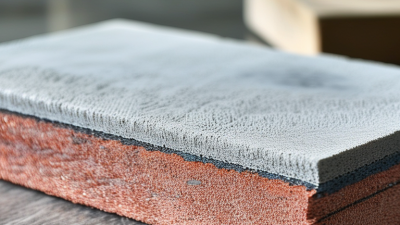
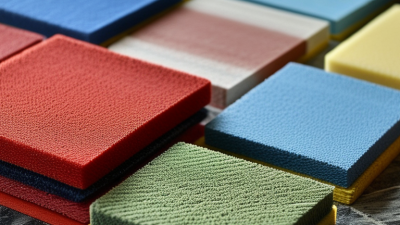
Backing material also affects handling. Flexible foam-backed pads follow curved basins and rounded corners. Rigid fiber-backed pads suit flat slabs and straight edges. Waterproof construction matters when wet polishing reduces heat and airborne dust. Check the pad’s grit range, diamond concentration, and edge stitching before purchase. Small construction details matter.

Surface finish should guide the final selection. Coarse grits create a uniform honed finish and remove visible tool marks. Medium grits produce a soft satin appearance with fewer scratches. Fine resin pads can create a semi-gloss surface on suitable stone. Extra-fine pads support high-gloss polishing, especially on dark granite and engineered quartz. Some pads are designed for matte, leathered, or brushed textures rather than shine.

Do not assume higher grit always means better results. I have seen operators skip intermediate grits and create cloudy patches. Testing a hidden area remains the safest practice. Keep hand pressure even, rinse the surface often, and inspect under angled light. Results can vary. Surface hardness, water quality, and operator technique all influence the finish.

How to Evaluate the Top 10 Pads for Different Polishing Requirements

Top 10 Diamond Hand Polishing Pads for Global Buyers

Evaluating the top 10 diamond hand polishing pads requires more than comparing grit numbers. A 2024 Grand View Research report valued the global abrasives market at over USD 40 billion, showing intense demand for consistent finishing tools. Yet market size does not prove pad quality. Test cutting speed, edge control, heat generation, and surface clarity on the same stone. A reliable pad should remove scratches evenly without leaving deep random marks. Check its diamond distribution, backing flexibility, water resistance, and usable life. ISO 6106 also provides guidance for classifying superabrasive grain sizes, which helps buyers compare grit specifications more accurately.

Match the pad to the material and polishing stage. Coarse pads suit lippage removal and visible scratches. Medium grits refine the surface. Fine pads improve gloss and reduce haze on granite, engineered stone, glass, or concrete. In practical workshops, a pad that cuts quickly may wear unevenly during dry work. That weakness matters. Record removal rate, working temperature, operator pressure, and finish quality for every test. The U.S. Geological Survey’s 2024 Mineral Commodity Summaries confirms that synthetic diamond dominates many industrial applications, but synthetic grain quality still varies by grade and processing method.

Tips: Ask for independent test data, not only product claims. Request samples from the same production batch. Inspect the pad after repeated passes. A lower price can become expensive when replacement intervals are short. Also, remember that water flow and backing support can change results dramatically. I would not rank pads by gloss alone; durability and predictable handling deserve equal weight.

Top 10 Diamond Hand Polishing Pads for Global Buyers - How to Evaluate the Top 10 Pads for Different Polishing Requirements
Rank Pad Type Typical Diameter Diamond Grit Range Bond / Construction Recommended Materials Best Polishing Stage Wet or Dry Use Typical Working Speed Key Evaluation Point Suitability Score
1 Resin Flexible Hand Pad 90–100 mm 50–3,000 grit Flexible resin diamond layer on a foam or fiber backing Marble, limestone, travertine, engineered stone Fine grinding through final polishing Wet; limited dry use at low pressure Hand use or low-speed tools; typically up to 4,000 rpm Good balance of flexibility, finish quality, and edge control ★★★★★
2 Electroplated Diamond Hand Pad 75–100 mm 30–600 grit Nickel-bonded diamond coating on a rigid or semi-flexible backing Granite, concrete, glass, ceramics, hard stone Fast stock removal and spot repair Wet or dry, depending on the backing and application Hand use or controlled tool use; typically up to 5,000 rpm High initial cutting speed and a consistent exposed diamond surface ★★★★★
3 Metal-Bond Diamond Hand Pad 90–100 mm 30–400 grit Sintered or brazed metal-bond diamond segment Concrete, terrazzo, granite, engineered quartz Heavy grinding and coating removal Wet recommended; dry use requires dust control Manual or low-speed equipment; typically 1,500–4,000 rpm Long wear life and strong resistance to abrasive materials ★★★★☆
4 Resin Bond Polishing Pad 80–100 mm 100–3,000 grit Resin-bond diamond abrasive with a flexible backing Granite, marble, quartz, porcelain slab Intermediate polishing through gloss finishing Wet preferred Typically 2,000–4,500 rpm Produces a smooth finish with lower risk of deep scratching ★★★★☆
5 Dry Polishing Hand Pad 90–100 mm 50–3,000 grit Dry-rated resin diamond layer with ventilation or open-cell backing Granite, engineered quartz, concrete edges Edge finishing and jobs where water is restricted Dry; dust extraction strongly recommended Typically 2,000–4,000 rpm Convenient for mobile work, but heat and dust must be controlled ★★★★☆
6 Wet Polishing Hand Pad 90–100 mm 50–3,000 grit Water-compatible resin or hybrid abrasive layer Marble, granite, terrazzo, concrete, engineered stone General-purpose grinding and polishing Wet only or wet strongly recommended Typically 1,500–4,000 rpm Lower surface temperature and reduced airborne dust ★★★★☆
7 Hybrid Bond Hand Pad 90–100 mm 30–1,500 grit Combined metal-resin abrasive formulation Concrete, terrazzo, granite, hard engineered stone Transition from grinding to polishing Wet preferred; selected grades may run dry Typically 1,500–4,000 rpm Reduces the number of abrasive changes between coarse and medium stages ★★★★☆
8 Flexible Foam-Backed Pad 80–100 mm 200–3,000 grit Thin resin diamond layer mounted on a flexible foam backing Curved edges, marble, limestone, ceramic and porcelain surfaces Fine polishing and contour work Wet recommended Typically 1,500–3,500 rpm Conforms well to curved profiles and helps prevent edge digging ★★★★☆
9 Rigid Edge Polishing Pad 75–100 mm 50–1,500 grit Rigid backing with a reinforced diamond abrasive surface Stone edges, concrete edges, ceramic and porcelain tile Edge shaping, beveling and localized repair Wet preferred; dry only with suitable dust extraction Typically 1,500–3,500 rpm Improves control on straight edges and maintains a uniform bevel ★★★☆☆
10 Micro-Diamond Finishing Pad 75–100 mm 1,000–10,000 grit Fine resin or microfiber-based abrasive finishing layer Marble, granite, engineered stone, glass and polished concrete Final haze removal and high-gloss finishing Wet preferred Typically 1,000–3,000 rpm Best for restoring clarity after the main polishing sequence ★★★☆☆
Selection guidance: Actual performance depends on diamond concentration, bond hardness, material hardness, operator pressure, cooling method, tool speed, and the condition of the working surface. Always verify the pad’s rated speed and wet/dry instructions before use.

Selection Criteria for Global Buyers: Grit, Compatibility, Durability, and Cost

Choosing the top ten diamond hand polishing pads requires more than comparing online ratings. Grit controls the surface result. Coarse 50–200 grit removes saw marks and uneven edges. Medium 400–800 grit refines visible scratches. Fine 1,500 grit and higher create a smoother finish. Test it wet. A small sample piece can reveal whether the abrasive cuts evenly or leaves deep lines. Grit numbers are not perfectly consistent between suppliers, so buyers should request actual specifications and sample results.

Compatibility affects both safety and productivity. Check whether the pad suits granite, marble, concrete, glass, or engineered stone. Confirm its backing shape, hand grip, and wet-or-dry working method. A pad that slips during polishing wastes material and may damage an edge. Durability depends on diamond concentration, bonding quality, water exposure, and pressure. In workshop use, excessive pressure often destroys pads faster than frequent use. I learned that the hard way. Cost should include shipping, replacement frequency, labor, and rejected pieces. Divide the purchase price by the number of usable square meters, not the pad’s advertised lifespan. Very cheap pads may become expensive after uneven wear appears. Keep a simple test record. Measure cutting speed, finish quality, and remaining abrasive after each trial.

Safe Usage, Maintenance, and International Purchasing Considerations

Top 10 Diamond Hand Polishing Pads for Global Buyers

Safe handling begins with the pad, the machine, and the surface. Check the pad for cracks, loose diamonds, or distorted backing before every use. Wear safety glasses, cut-resistant gloves, hearing protection, and a suitable dust mask. Keep hands away from the rotating edge. Use the recommended speed and pressure; excessive force can overheat the pad and mark stone surfaces. Wet polishing can reduce airborne dust, but water must suit the equipment and work area. Never assume every pad supports wet and dry operation.

Maintenance affects both finish quality and service life. Rinse away abrasive slurry after use, especially from the hook-and-loop backing. Let the pad dry completely in a shaded, ventilated place. Do not stack damp pads. Store them flat or supported, away from heat and direct sunlight. A simple log can record grit, material, operating time, and visible wear. This is useful, though imperfect. Human inspection still matters. Replace a pad when its surface becomes uneven, backing weakens, or polishing results change suddenly.

For international purchasing, confirm diameter, grit range, backing type, working speed, and wet or dry compatibility in writing. Request samples from the same production batch before placing a large order. Product labels should identify materials, operating limits, storage guidance, and applicable safety information. Packaging must protect edges from crushing during transport. Ask suppliers about quality checks and batch consistency, but verify claims independently through testing. Customs requirements, product classification, and workplace rules vary by destination, so buyers should consult local professionals before shipment.