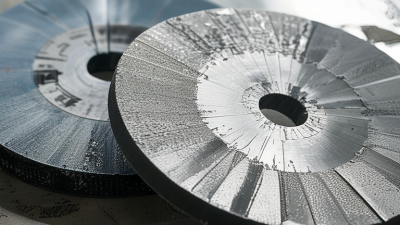
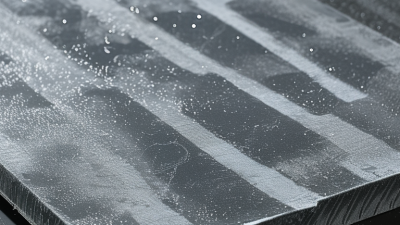
Choosing the best maker of Floor Polishing Pads in China depends on more than a low quotation or polished product photos. A pad must match the floor, machine speed, and polishing stage. A mismatch can leave uneven gloss, visible swirl marks, or unnecessary wear. Small details matter.
This guide looks at how buyers can compare Chinese manufacturers using practical evidence. We consider pad materials, grit options, thickness consistency, bonding quality, and documented quality checks. We also look at a supplier’s ability to explain which pad suits concrete, terrazzo, or stone, rather than offering one vague answer for every surface. Ask for samples. Test them on a representative area. Check the finish under direct light, and note how the pad performs after repeated passes.
A website alone proves little. Reliable manufacturers should provide clear specifications, realistic performance claims, and responsive technical support. Buyers can also ask about production capacity, sample lead times, packaging, and how defects are handled. These checks do not guarantee a perfect purchase, but they make comparison more grounded.
There is no universal winner. A pad that works well on polished concrete may disappoint on marble, and results can vary with the machine and operator. No shortlist is perfect. Still, careful testing and transparent supplier communication can reveal which manufacturers deserve closer attention—and which claims need more evidence.
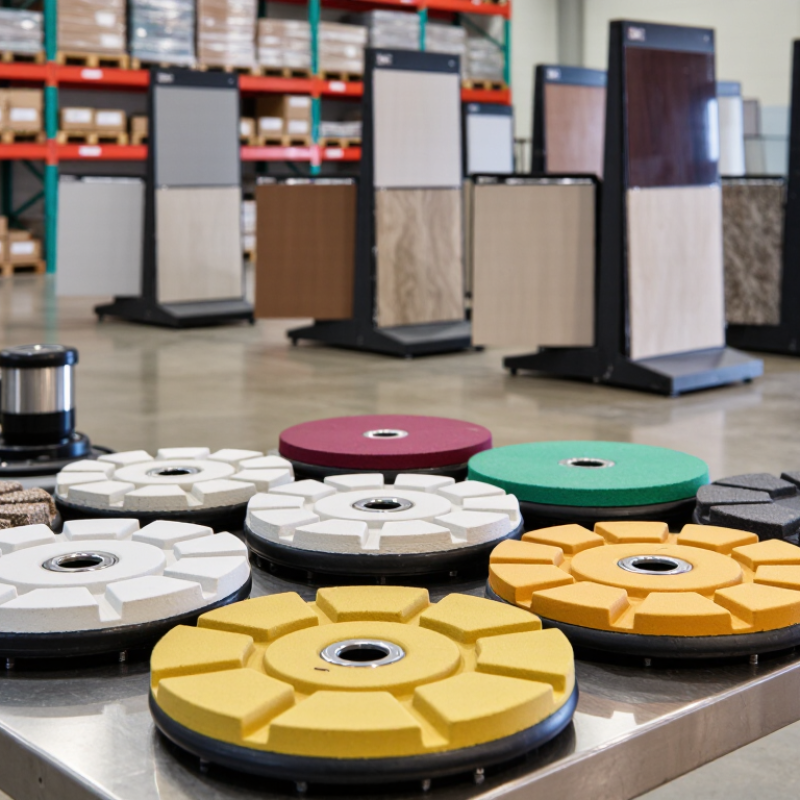
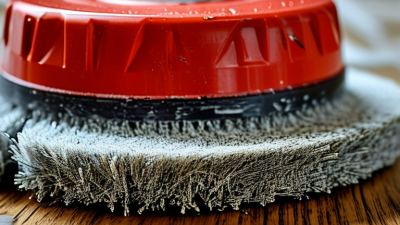
Floor polishing pads are abrasive or conditioning discs fitted to a rotary floor machine or compatible hand tool. Depending on their material and grit, they can remove light marks, refine a surface, or create a smoother sheen. Diamond-impregnated pads are often used on stone and concrete, while softer pads may suit routine cleaning. Not every pad suits every floor. Check the flooring, machine speed, and pad instructions before starting.
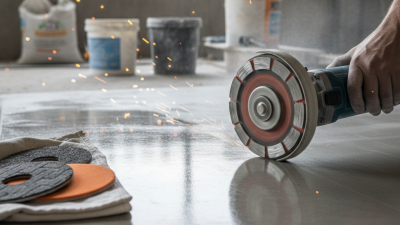
Use a coarse pad only when the surface needs more correction, then move through finer grades to reduce visible scratches. Keep the pad flat and the machine moving; lingering in one spot can leave uneven marks. Some systems use water to control heat and carry away slurry, while others are designed for dry use. Follow the pad maker’s directions, and test a small, inconspicuous area first. The floor should be clean before polishing, since trapped grit can scratch it.
Watch the surface as you work. A dull patch may need another pass, but adding pressure is not always the answer. On softer stone, aggressive pads can remove more material than intended. In practice, the first pass may look underwhelming, and that is worth noticing rather than forcing a glossy result. Rinse or vacuum residue between stages, then let the floor dry before judging its finish.
How to Evaluate the Quality of Chinese Floor Polishing Pads
A growing market does not guarantee a better pad. Grand View Research valued the global concrete floor coatings market at USD 4.7 billion in 2023, with projected growth through 2030. That figure signals demand, not product quality. Buyers should compare measurable performance instead of relying on polished catalog claims. Ask for a batch-specific test report showing cutting rate, pad wear, and results across the same concrete and machine settings. ASTM C779/C779M provides recognized methods for comparing abrasion resistance on concrete surfaces. It is not a pad-certification standard, but it helps assess the floor and keep trials consistent.
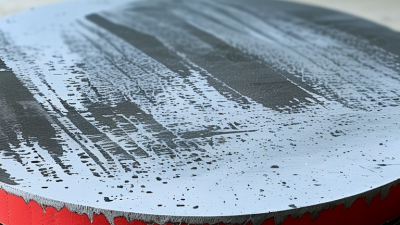
Inspect the pad under bright light. Check segment height, bond uniformity, and whether the backing sits flat; uneven segments can leave visible rings. Test several grit stages on the same floor area, recording working time, water flow, and scratch depth. A useful supplier report includes test conditions, sample size, and repeat results—not just one impressive number. Look closely. If performance changes sharply between batches, request traceable lot records. I would not treat one fast-cutting sample as proof of durability; it may simply use a softer bond. This is where evaluation gets imperfect: concrete hardness and operator pressure can skew comparisons. A small, documented trial is still more dependable than claims alone.
Use this buyer-side scorecard to compare suppliers without relying on brand claims. The targets below are suggested screening criteria, not universal industry specifications; confirm requirements against the pad type, floor material, machine, and agreed purchase specification.
| Evaluation dimension | How to evaluate | Suggested screening target | Weight |
|---|---|---|---|
| Abrasive grade and pad identity | Check that pad labels, packaging, and batch documents match the ordered abrasive type and grade. Test pads on the same substrate if the grade cannot be verified from documentation alone. | All sampled pads match the purchase specification; the supplier identifies the abrasive type and grade consistently. | 10% |
| Dimensions and fit | Measure diameter and thickness on 10 randomly selected pads with suitable measuring tools. Fit samples to the intended driver or machine plate. | Measurements fall within the tolerances agreed on the drawing or purchase order; pads mount securely without interference. | 10% |
| Bond integrity and abrasive retention | Inspect the pad before and after a controlled polishing run under the specified wet or dry conditions. Look for separation, cracking, or unusual material shedding. | No delamination or structural failure during the agreed test; wear is even and appropriate for the pad design. | 15% |
| Material removal rate | Run at least three trials using the same floor sample, machine, speed, applied load, water condition, and polishing time. Record material removal using a consistent measurement method. | Average removal rate is at least 90% of the approved reference pad under the same test conditions, unless the order specifies another target. | 15% |
| Finish and scratch consistency | Polish comparable areas with the same procedure. Inspect under consistent lighting and, where available, record surface gloss or roughness using the same instrument and settings. | Produces the finish required for the specified step, with no unexpected deep scratches or conspicuous variation across the test area. | 15% |
| Useful service life | Test replicate pads under the same operating conditions. Record working time or area completed until the agreed end-of-life condition, such as loss of effective cutting or unacceptable finish. | Average usable life meets the buyer’s requirement and is comparable to the approved reference when tested on the same floor and machine. | 10% |
| Batch-to-batch consistency | Compare samples from three production batches using the same dimensional and performance checks. Keep the substrate and operating conditions constant. | No material change in fit, finish, or removal performance between batches; any agreed numerical variation limit is documented and met. | 10% |
| Machine stability and operating behavior | Check pad seating, vibration, noise, and heat during a supervised run within the machine and pad operating instructions. | Runs securely without abnormal vibration, detachment, or visible deformation under the agreed operating conditions. | 5% |
| Quality records and traceability | Review the product specification, inspection records, batch identification, and any applicable test reports. Confirm that documents refer to the ordered product. | Records are clear, current, and traceable to the supplied batch; test conditions and acceptance criteria are stated. | 10% |
| Total evaluation weight | 100% | ||
Comparison tip: Request production samples and evaluate all suppliers using the same written test protocol. The “best” pad depends on the floor material, polishing step, machine, operating conditions, finish requirement, and total cost per area—not price or a single performance figure alone.
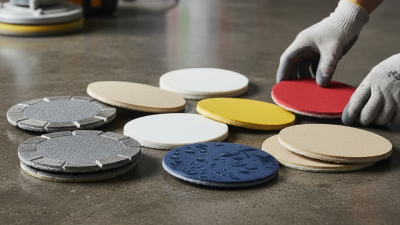
Chinese floor-polishing-pad manufacturers generally fall into three groups. Diamond-abrasive specialists focus on metal-bond and resin-bond pads for concrete or stone. They tune diamond concentration, bond hardness, and grit sizes for different floor conditions. OEM and export-focused factories often offer private-label production, custom diameters, and hook-and-loop backing. Integrated flooring suppliers may pair pads with grinding machines and recommend a full grit sequence. Useful details matter: a pad that cuts quickly on hard concrete may leave uneven scratches on softer stone.
The wider construction market provides context, but not a direct measure of pad sales. China’s National Bureau of Statistics reported construction output value of about 31.59 trillion yuan in 2023. That figure signals a large building sector; it does not show polishing-pad demand. Buyers should compare sample results on the actual floor, checking scratch patterns, heat, and pad wear. Test before scaling. Ask for bond type, grit standards, wet-or-dry guidance, and batch consistency. Price alone can mislead. One limitation: published data rarely separates polishing pads from broader abrasive products, so supplier claims deserve careful verification.
A fair comparison of Chinese floor polishing pad manufacturers starts with a controlled test, not a price list. Use the same concrete slab, machine, water flow, and grit sequence for every sample. Record how quickly each pad removes scratches and whether it leaves swirl marks or uneven gloss. Watch the edges, too. Chipping after a few passes can make a low-cost pad expensive in practice. Small details matter.
Performance also depends on the bond and the floor. A pad suited to hard concrete may cut slowly on a softer surface, so test recommendations against the actual job. For value, compare cost per square meter finished, not just cost per pad. Note how many square meters each sample covers before its cutting action fades. Ask about grit consistency, batch checks, and clear use instructions. These are useful signals, though paperwork alone cannot prove field performance.
A simple sample trial is worth the extra time. Photograph the surface under the same light, and keep notes on machine speed, water use, and polishing time. Results can vary with operator technique and concrete mix; one test is not a verdict. The comparison is not perfect. Still, repeatable results and predictable wear often matter more than the lowest quote.
Choosing a Chinese floor polishing pad supplier starts with matching the pad to your floor, machine, and working conditions. Tell suppliers whether you polish marble, concrete, or terrazzo, and share the machine’s speed and pad diameter. Ask for the bond type, grit range, recommended sequence, and whether the pads are designed for wet or dry use. Clear answers matter. Vague claims about “fast polishing” are not enough.
Request a sample and test it on a small, representative area. Note the time needed to remove visible scratches, the finish after each grit, and how quickly the pad wears. Test it wet. Watch for uneven wear, heat, or residue on the floor. A polished sample can mislead if it was tested on different stone or with another machine. Record the conditions, even if your first test is imperfect.
Check whether the supplier can provide consistent specifications across repeat orders, plus practical packaging details such as pad labels and grit markings. Ask how defects are handled and what information they need to investigate a quality issue. Keep records. Confirm production lead times, sample costs, and shipping terms in writing before ordering. A short trial order is often more useful than relying on a catalogue photograph. You may still need to adjust the grit sequence for your site; real floors rarely behave exactly like test pieces.