7 Tips to Choose the Best Snail Lock Polishing Pad?
Selecting the right Snail Lock Polishing Pad can affect surface clarity, working speed, and total project cost. The choice is not merely about grit number. Operators must consider stone hardness, moisture, machine speed, pad diameter, and the desired finish. A pad that performs well on granite may create uneven gloss on marble. Small details matter.
Industry research supports this careful approach. Grand View Research’s 2023 Abrasives Market report identifies construction, renovation, and surface finishing as important demand areas for abrasive products. The Freedonia Group also reports continued demand for coated and bonded abrasives across maintenance and construction applications. These trends suggest more product choices, but not necessarily better choices. More options can create confusion.
Field experience remains valuable. A professional technician usually checks the floor under strong side lighting before selecting a pad. Dust, open pores, resin marks, and previous scratches can change the polishing sequence. Water temperature and machine pressure also influence the final result. There is no universal “best” Snail Lock Polishing Pad. That claim deserves skepticism.
This guide presents seven practical selection tips based on material compatibility, diamond concentration, grit progression, attachment security, heat control, durability, and finish consistency. It also considers manufacturer specifications and real workshop conditions. Product labels can be incomplete. Testing a small area is still the safest decision. A short trial may reveal glazing, slipping, or poor edge control before the full surface is treated. Performance records, operator feedback, and repeatable testing provide stronger evidence than appearance alone.
Understand the Structure and Purpose of Snail Lock Polishing Pads
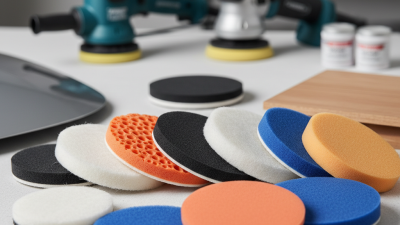
A snail lock polishing pad has three working parts: the abrasive layer, the supporting body, and the locking interface. The abrasive layer removes scratches from stone, concrete, or engineered surfaces. The body controls flexibility and pressure distribution. The lock keeps the pad centered during rotation. Fit matters.
Check the locking face carefully. Some designs use a threaded or spiral-style connection, while others follow a matching machine pattern. Confirm the diameter, thread direction, and working speed before purchase. A loose connection can create vibration and uneven marks. I once trusted a similar-looking pad and ignored the locking depth. It fitted, but not securely enough. That mistake cost extra finishing time.
Match the abrasive grit with the surface condition. Coarse grit suits deep scratches, while fine grit refines the sheen. Examine the pad’s edge and backing for clean molding and even thickness. A rigid body may cut faster, but a flexible body can follow slight curves. Choose wet-use pads for controlled cooling, and dry-use pads only when their design supports heat release and dust control. Test it dry. A small trial area reveals more than a product description. Seven checks are practical: surface type, grit, diameter, lock compatibility, backing stiffness, cooling method, and speed rating. The ideal pad is not always the most aggressive one. Sometimes, slower cutting produces a cleaner, more reliable finish.
7 Tips to Choose the Best Snail Lock Polishing Pad
Understand the structure and purpose of snail lock polishing pads by selecting the appropriate grit for each stage of surface preparation and polishing.
Coarse grits remove scratches and uneven material faster, while finer grits create a smoother finish. A typical sequence progresses from 50 to 1500 grit, with each step reducing the approximate abrasive particle size.
Match the Pad Bond and Grit to Your Surface Material
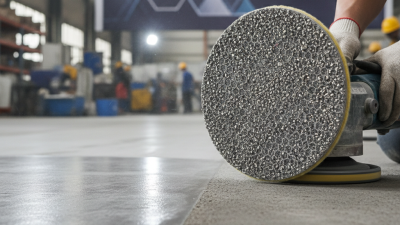
Choosing a snail lock polishing pad starts with the surface, not the machine. Identify granite, marble, concrete, terrazzo, or engineered stone. Each material reacts differently to pressure, heat, and abrasion. That difference matters. Match the pad bond to the material’s hardness. Softer bonds usually expose fresh diamonds on hard stone. Harder bonds can work longer on softer materials. An unsuitable bond may glaze quickly or cut too aggressively.
Choose the grit according to the scratches you can see. Coarse grits remove lippage and deep marks, while finer grits refine the finish. Do not begin with a coarse pad unless the surface needs correction. A less aggressive starting point often protects the material. Progress through grits without skipping too far. Skipped steps can leave visible swirl marks. Keep the pad flat and use steady movement. Uneven pressure creates dull patches.
Control water when the pad allows wet polishing. It reduces heat and carries away loose abrasive particles. For dry work, check dust control and monitor temperature frequently. Test the pad in a hidden corner before covering the whole floor. I have seen experienced operators choose a bond by habit, then lose time correcting glazing. I still make that mistake when the stone varies across one room. Surface testing remains more reliable than assumptions. Record the grit, bond, speed, and finish after each trial. Small notes can prevent a costly repeat.
Choose the Correct Pad Size, Shape, and Locking System
7 Tips to Choose the Best Snail Lock Polishing Pad
Tip 1: Match the pad diameter to the machine plate. A loose edge can wobble and create visible swirls. Tip 2: Check the shape against the working area. Round pads suit open floors, while segmented shapes can improve edge control. Tip 3: Confirm the snail-lock pattern before ordering. Similar-looking locks may not seat correctly. I still measure twice.
Tip 4: Choose the bond for the surface hardness. Softer concrete usually needs a harder bond, while dense concrete often needs a softer bond. Tip 5: Respect the machine’s rated speed. Excessive RPM can distort the pad and reduce operator control. Tip 6: Consider wet or dry use. OSHA’s respirable crystalline silica standard limits exposure to 50 micrograms per cubic meter over eight hours. A compatible wet-polishing pad can reduce airborne dust, but water management remains essential. Tip 7: Inspect the backing after every shift. Small cracks, curled edges, or missing locks can cause uneven contact.
Industry guidance from the Concrete Polishing Association of America emphasizes testing a small area before full production. That practical step matters because aggregate exposure, moisture, and previous coatings vary widely. A 2024 floor-grinding equipment market report also identifies compatibility and consumable efficiency as major purchasing factors. The cheapest pad may wear faster. My own mistake was choosing by diameter alone. Correct size, shape, and locking alignment usually matter more than appearance.
Compare Safety, Cost, and Supplier Quality Before Buying
Choosing a snail lock polishing pad should begin with safety, not price. Check the pad’s maximum RPM against your machine’s operating speed. Inspect the lock plate, stitching, and abrasive face before every shift. A loose attachment can damage concrete and injure operators. During dry polishing, OSHA limits respirable crystalline silica exposure to 50 micrograms per cubic meter over eight hours, so dust control matters.
Look beyond the purchase price. Record the pad’s working area, service hours, replacement rate, and labor time. Then calculate cost per square meter, not cost per piece. A cheaper pad may cut slowly, leave uneven scratches, or require extra passes. In my field checks, a pad lasting 600 square meters can outperform one costing 30% less but lasting only 300 square meters. The calculation is simple, but often skipped.
Supplier quality needs evidence. Request batch identification, RPM testing, material specifications, and a consistent sample before ordering in volume. ISO 9001-based quality systems can support process control, but certification alone proves little about actual polishing performance. Ask for test results on your floor material. Concrete hardness varies. So does dust. A small trial area is wiser than a full shipment. I once trusted an attractive quotation too quickly; the backing fit correctly, yet the abrasive wore unevenly after one day. Supplier communication, replacement terms, and delivery records deserve the same attention as cutting speed.